

Homes and facilities must become robot-ready.
Beyond robots doing the building: there is an emerging need for spaces where autonomous systems can operate, dock, recharge, shelter and coexist with people.
Robot-ready environments
Architecture that anticipates autonomous systems.
Robot-compatible circulation, thresholds, lifts, doors, communications and safe shared spaces can become important as service, delivery, care and assistance robots enter more residential and mixed-use environments.
Purpose-built docking zones, protective shelters, power systems and maintenance facilities form a related infrastructure market.
Explore the acquisition opportunity ↗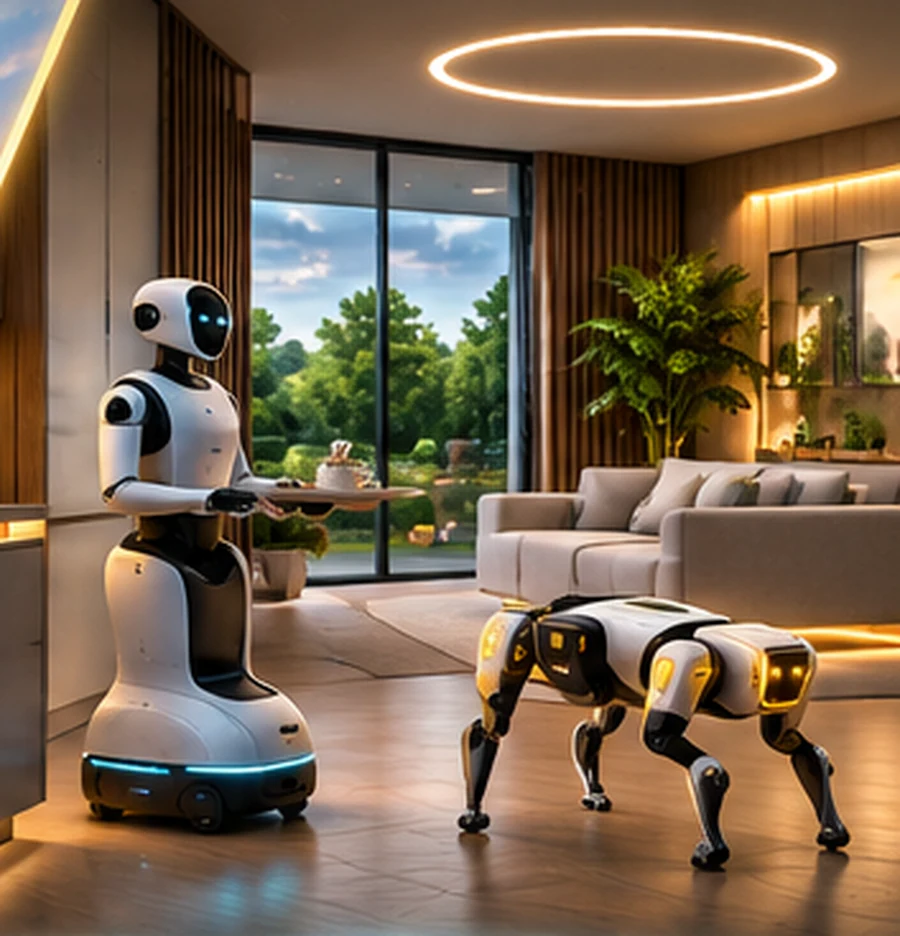
Support infrastructure for physical AI.
Purpose-built facilities and spaces support autonomous machines throughout their operating lifecycle.

Robot-ready living spaces
Residential and mixed-use architecture planned for robotic navigation and safe coexistence.

Docking & charging
Power interfaces, autonomous return stations, parking zones and service bays.

Shelter & protection
Weather-protected robot shelters, equipment enclosures and deployment hubs.

Integrated infrastructure
Connectivity, access management, mobility clearances and facilities coordination.

A distinct technical interpretation
Robot housings, shelters and operational spaces.
In engineering, a robot housing can also mean a protective mechanical enclosure for an actuator, sensor, controller or machine body. That is a related but more component-specific market than robot-ready housing and dedicated robot shelters.
These engineered housings sit alongside the wider market for docking facilities, protective shelters and robot-ready buildings.
Private acquisition
Position a digital asset for robot-ready spaces.
Suitable for consideration by robotics-infrastructure developers, smart-building ecosystems and organisations planning autonomous-ready facilities.